Enterprise Architecture has gone through several generational shifts, from early documentation-heavy frameworks to today’s agile, model-driven practices. As organizations demand faster alignment between business and IT, legacy standards have begun to show their limitations. This is where ArchiMate steps forward. Clear, structured, and purpose-built for architecture work, it is rapidly becoming the preferred language for modern EA teams. With the support of today’s enterprise architecture tools and modeling platforms, ArchiMate brings clarity to complex changes in a way older standards struggled to achieve.
From Heavy Documentation to Visual Clarity
Legacy approaches often depended on large text-based specifications, fragmented diagrams, or inconsistent notations that varied across teams. As a result, architects spent more time interpreting documents than designing improvements. ArchiMate modernizes this experience with a unified, layered language that makes it possible to trace business motivation, processes, applications, and technology in a single model. When used in an EA modeling tool, the language becomes even more powerful, allowing teams to visualize architecture gaps, transitions, and future-state scenarios with much greater accuracy.
Why Legacy Standards Struggle Today
Older standards such as BPMN, UML, and ad-hoc enterprise diagrams still play roles in certain areas, but they were never designed to serve as a complete enterprise architecture notation. Their limitations become clear when organizations adopt large-scale transformation programs.
Some of the most common challenges include:
- Fragmented notations across teams, tools, and documentation
- Diagrams that describe processes or systems but fail to show cross-layer connections
- Heavy reliance on manual documentation, leading to inconsistencies and outdated models
- Difficulty communicating architecture intent to non-technical stakeholders
- Lack of support for strategic, capability-driven architecture practices
This is where ArchiMate, supported by modern EA tools, provides a more cohesive and scalable solution.
ArchiMate’s Strengths in a Modern Enterprise
ArchiMate was designed specifically for enterprise architecture, not adapted from software engineering or business process modeling. Its structure makes it naturally compatible with capability mapping, application rationalization, technology roadmaps, and cross-domain dependency analysis.
Key strengths include:
- A fully integrated language that spans strategy, business, application, and technology
- Consistent visual grammar that reduces interpretation gaps
- Strong alignment with TOGAF, making it ideal for organizations using the TOGAF ADM
- Support for both high-level and detailed views, depending on stakeholder needs
- Built-in traceability, helping teams translate motivation into implementation
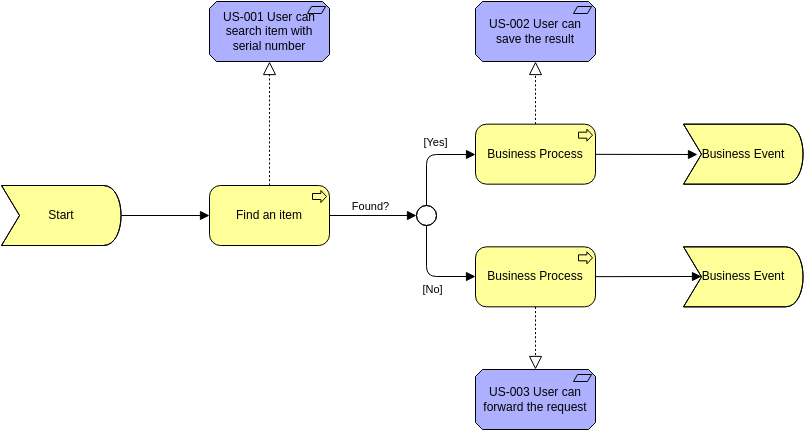
When used inside an enterprise architecture tool, these strengths become even more impactful with features like automated layout, relationship checking, version control, and collaborative editing.
Accelerating Digital Transformation
Modern digital initiatives, from cloud migration to AI adoption, require clear maps of how systems, data, processes, and capabilities interact. ArchiMate allows teams to document these connections visually and precisely, reducing the ambiguity that often slows transformation efforts.
Organizations are adopting ArchiMate because it helps them:
- Understand current-state complexity
- Identify architecture risks and redundancies
- Design future-state scenarios
- Communicate plans more effectively with non-technical leaders
- Maintain a single source of truth across the architecture
Legacy frameworks do not provide this level of coherence or speed, especially when used with fragmented tooling. ArchiMate fills this gap with a modern, scalable structure that fits today’s rapid delivery environment.
Why ArchiMate Is Becoming the New Standard
The shift toward ArchiMate is not just a trend. It reflects a broader transformation in how enterprises think about architecture: more visual, more integrated, and more aligned with business outcomes. As EA teams move toward model-driven practices, ArchiMate offers a future-proof approach that grows with the organization.
Supported by modern EA modeling software, ArchiMate delivers the clarity, consistency, and agility enterprises need to manage continuous change. Legacy standards will continue to play supporting roles, but ArchiMate is increasingly becoming the central language that ties everything together.