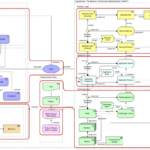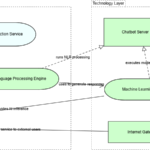


ArchiMate, TOGAF, UML, and the C4 model are often mentioned together in discussions about architecture documentation, yet each of them solves a very different problem. ArchiMate is a standardized modeling language that visualizes enterprise architecture across business, application, and technology layers. TOGAF functions as a methodology that guides how architecture is developed and governed. UML focuses on detailed software and system design, while the C4 model provides an accessible way for modern development teams to illustrate system structures at varying levels of abstraction. Understanding how these approaches differ — and how they complement one another — is essential for anyone trying to build a consistent and practical enterprise architecture practice.
Many architecture teams struggle because diagrams, documentation, and system designs are created in isolation. The result is fragmented understanding, misaligned decisions, and models that quickly become outdated. By exploring how ArchiMate, TOGAF, UML, and C4 fit together, it becomes easier to decide which approach supports which part of the architecture lifecycle.
1. Understanding the Role of Each Framework
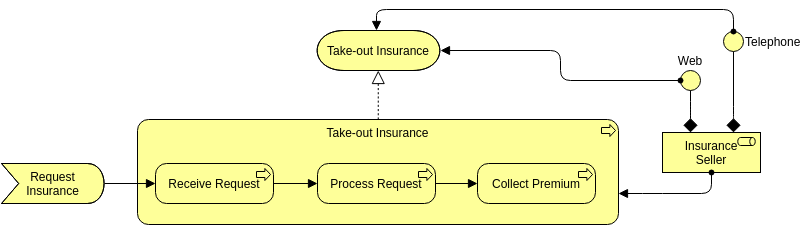
ArchiMate was designed to provide a uniform way to describe enterprise architecture. It helps architects express how business capabilities, processes, applications, data, and technology relate to one another. Its layered notation creates a coherent view of the enterprise, which is especially valuable in large organizations where strategy and implementation must stay aligned.
TOGAF, in contrast, is not a modeling language. It is a complete enterprise architecture framework that includes principles, governance structures, reference models, and the well-known ADM cycle. While ArchiMate shows what the architecture looks like, TOGAF describes how it should be developed. The two are often used together: TOGAF shapes the process, and ArchiMate expresses the results.
UML occupies a different space. Created originally for object-oriented software design, it provides a collection of diagram types that describe classes, interactions, states, activities, and deployments. UML does not attempt to model business capabilities or enterprise strategy. Instead, it offers a detailed and precise view of how software components behave, making it particularly useful to developers and system designers.
The C4 model serves modern development teams who need clarity without excessive notation. Its four levels — context, containers, components, and code — allow teams to zoom in and out of a system in a way that remains easy for both technical and non-technical audiences to follow. While it is far less formal than ArchiMate or UML, its simplicity is a major advantage when communicating high-level architecture quickly.
2. ArchiMate and TOGAF: Complementary, Not Competing
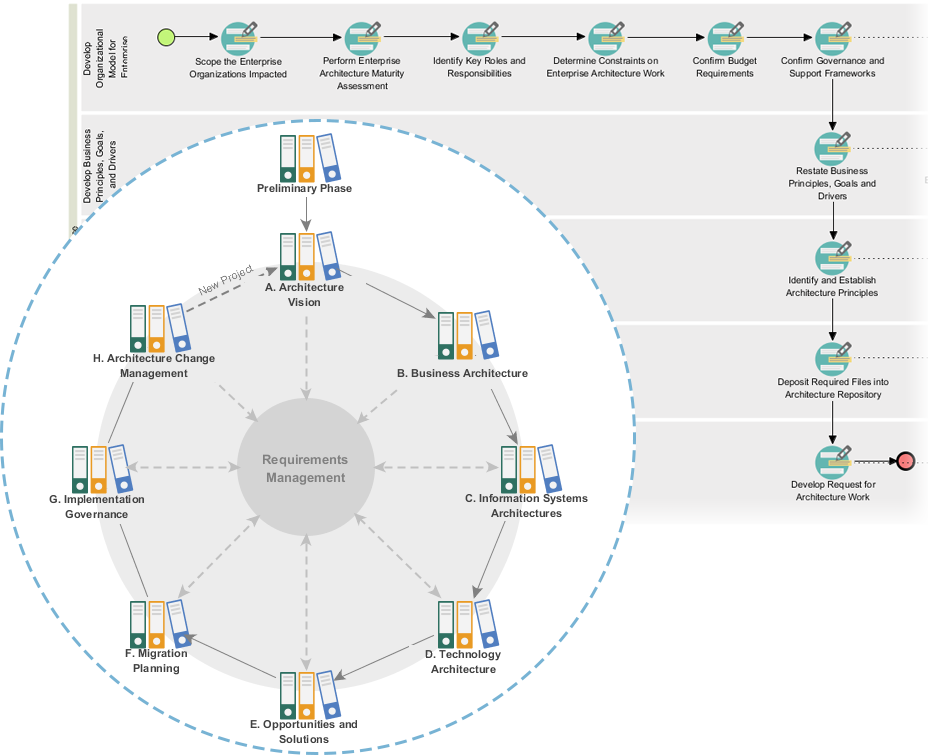
It is common to see ArchiMate and TOGAF mentioned together because they originate from the same organization, The Open Group. They are designed to work hand in hand rather than compete. TOGAF provides guidance on how enterprise architecture practices should be structured, governed, and executed. It defines the phases of the ADM cycle, the kinds of deliverables that should be produced, and the principles that shape decision-making.
ArchiMate serves as the visual language for representing many of those deliverables. While TOGAF might instruct you to create a baseline architecture or a target application landscape, ArchiMate gives you the notation for drawing that landscape. In transformation projects, this relationship becomes especially powerful. TOGAF offers the process for moving from strategy to implementation, while ArchiMate visualizes the architecture states, the gaps between them, and the dependencies that influence planning.
3. ArchiMate and UML: Different Levels of Detail
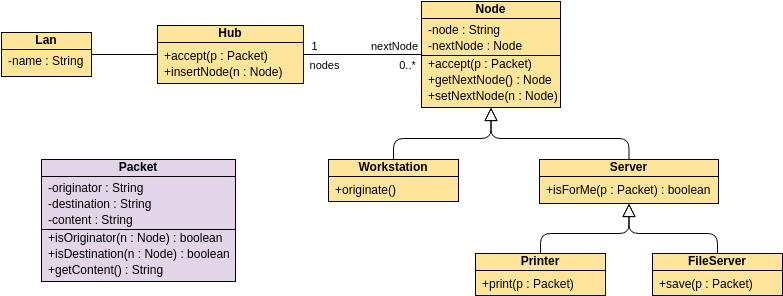
ArchiMate and UML often appear to overlap because both are modeling languages, but they address completely different questions. ArchiMate answers how business processes depend on applications, how capabilities support strategy, and how technology enables the organization. Its purpose is to connect the business view with the IT view in a way that makes sense to executives, analysts, and architects.
UML, on the other hand, dives into the mechanics of software. A UML class diagram explains how classes relate, a sequence diagram shows how messages flow between components, and a state machine describes the internal behavior of a system. These details are essential for implementation but are too technical for enterprise-level analysis. As a result, ArchiMate and UML are most effective when used together: ArchiMate provides the big picture of how systems fit into the enterprise, while UML describes how those systems are designed internally.
4. ArchiMate and the C4 Model: Structure vs. Simplicity
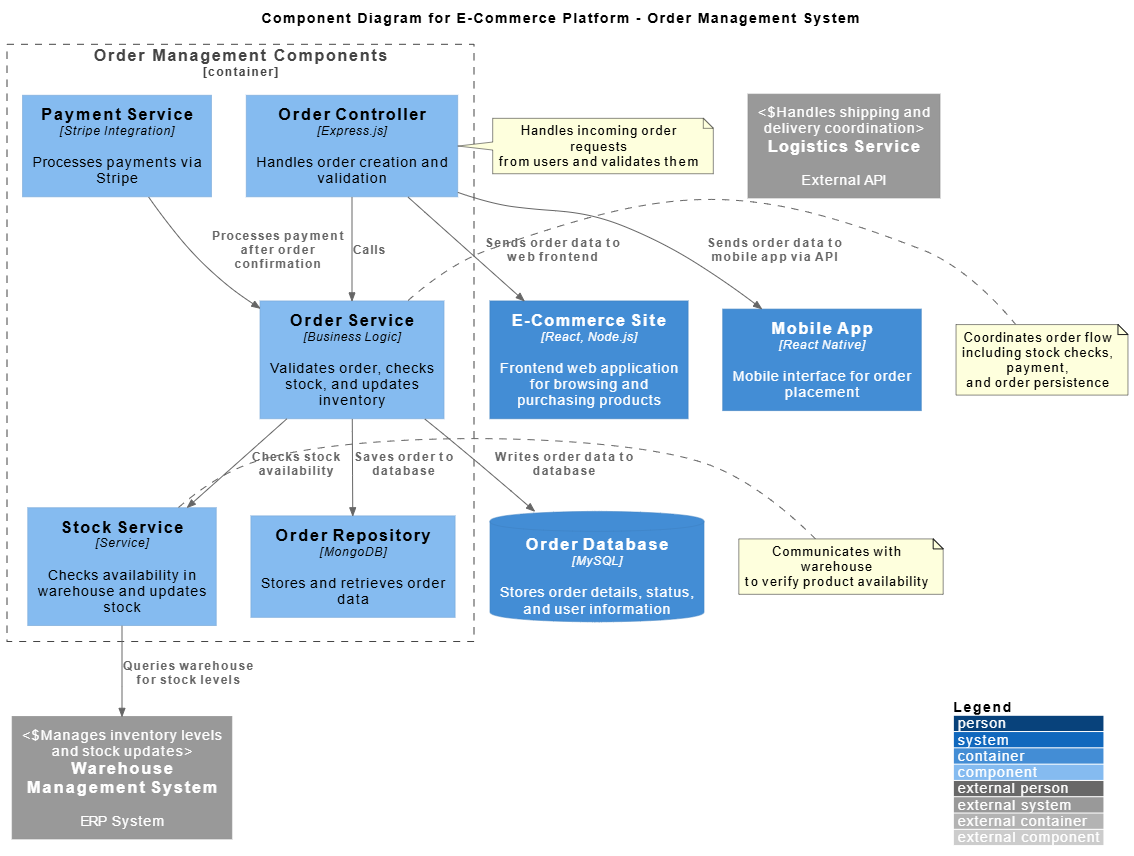
The comparison between ArchiMate and the C4 model is becoming more common as organizations adopt lightweight documentation practices. ArchiMate offers a rich, standardized notation that spans strategy, business, data, application, and technology layers. It gives architects a consistent way to analyze impacts, visualize dependencies, and maintain coherence across the enterprise.
The C4 model deliberately avoids this complexity. Its aim is to make system architecture comprehensible at a glance. A C4 diagram shows how a system interacts with external actors, how it is broken into containers and components, and how code structures support functionality. Because it uses plain boxes, arrows, and short descriptions, it is often the preferred way for developers to communicate system designs.
Although the models serve different purposes, they can coexist very effectively. ArchiMate can show where a system sits in the enterprise, who depends on it, and how it supports business capabilities. C4 diagrams can then explain how that system works internally. This dual-layer approach bridges strategic and technical perspectives in a way that both executives and engineers can understand.
5. Choosing the Right Approach for Your Architecture Needs
Selecting the right framework depends on the scope and purpose of the work. If your aim is to understand the enterprise landscape or plan a transformation roadmap, ArchiMate provides the clarity and structure needed to visualize the relationships between business functions, applications, and technology. When governance, process maturity, and long-term planning are important, TOGAF becomes the backbone of the architecture practice.
For software projects that require precise system behavior and design specifications, UML remains one of the most comprehensive modeling languages available. Teams working in fast-moving environments, especially those using microservices or cloud architectures, often gravitate toward the C4 model because it offers clarity without overwhelming detail.
In many cases, organizations benefit from using these approaches together. TOGAF guides the overall process, ArchiMate expresses the enterprise view, and UML or C4 provides the technical design required for implementation. When applied in combination, they create a coherent and traceable documentation ecosystem that spans strategy, design, and execution.
6. How an EA Modeling Tool Supports All Frameworks
A unified modeling environment such as Visual Paradigm AI Chatbot can bring these approaches together by supporting ArchiMate diagrams, UML specifications, and C4 visualizations in one place. This makes it easier to maintain consistent documentation, trace the connections between enterprise architecture and system design, and collaborate with stakeholders who may each prefer different modeling styles. With AI-assisted diagram generation and browser-based collaboration, teams can produce architecture diagrams quickly while keeping everything aligned from high-level strategy to low-level software design.
7. FAQ
Are ArchiMate and TOGAF the same?
They are related but not the same. TOGAF is a methodology, while ArchiMate is a modeling language used to express the architectural outputs created through that methodology.
Can UML be used for enterprise architecture?
UML is best suited for software design. It becomes too detailed to represent enterprise-level concepts effectively, which is why ArchiMate is preferred for broader architectural analysis.
Is the C4 model a replacement for UML?
Not entirely. C4 is simpler and easier to understand at a high level, but UML remains useful for detailed system behavior and internal structure.
Do organizations need all four approaches?
Not necessarily. The choice depends on goals, maturity, and project type. Many organizations combine them to achieve a complete architecture lifecycle.
Which one is most beginner-friendly?
The C4 model is the easiest to learn due to its simplicity, followed by UML. ArchiMate and TOGAF require more structured learning because of their breadth and formality.