


Manual modeling is often treated as a necessary part of Enterprise Architecture. Teams accept the time spent drawing diagrams, aligning shapes, and updating relationships as unavoidable. Over time, however, this effort accumulates into a significant hidden cost.
These costs rarely appear in project plans or budgets, but they impact productivity, accuracy, and architectural relevance. As organizations move faster and architectures grow more complex, traditional modeling approaches struggle to keep up.
AI diagram tools address this challenge by shifting the focus away from manual diagram construction and toward architectural thinking. This article explores the hidden costs of manual modeling and explains why AI-assisted diagramming is becoming essential for modern teams.
Time Loss That Scales with Complexity
Every architecture model grows over time. New systems are added, processes evolve, and strategies shift. In a manual modeling environment, each change requires hands-on updates across multiple diagrams.
What begins as a few minutes of editing can turn into hours of repetitive work. The more complex the architecture becomes, the more time is spent maintaining diagrams rather than analysing them. An AI diagram tool reduces this burden by applying changes automatically across related views. When architects describe a change, the tool handles the structural updates, saving time at every scale.
Inconsistency Across Diagrams and Teams
Manual modeling relies heavily on individual discipline. Different architects may interpret notation slightly differently, apply inconsistent naming conventions, or update some views while forgetting others.
Over time, these inconsistencies erode trust in the architecture. Stakeholders begin to question which diagram is correct, and models lose their value as a shared reference. AI-assisted tools help enforce consistency by maintaining a single underlying model. Relationships, element definitions, and updates are synchronized automatically, reducing the risk of divergence.
Cognitive Overhead and Context Switching
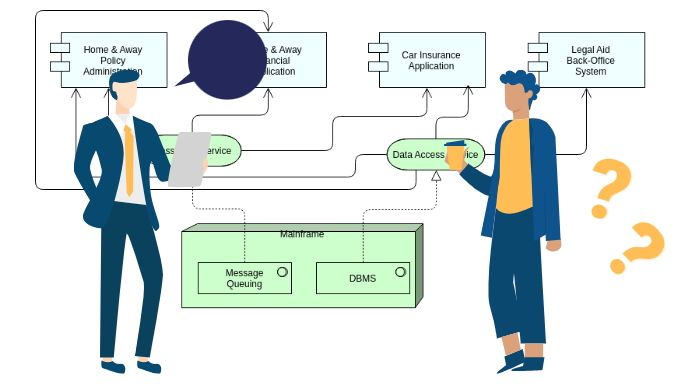
Manual modeling requires architects to think about two things at once: architectural intent and diagram mechanics. This constant context switching adds cognitive overhead and increases the likelihood of errors.
Instead of focusing on questions such as “Does this system support our strategy?”, architects are distracted by layout decisions, connector routing, and notation details. AI diagram tools remove much of this friction. By allowing changes through text prompts or guided input, they free architects to concentrate on meaning rather than mechanics.
Delayed Updates and Outdated Architecture
When updating diagrams is time-consuming, updates tend to be postponed. This leads to a familiar problem: architecture models that no longer reflect reality.
Outdated diagrams undermine confidence and reduce the usefulness of Enterprise Architecture as a decision-support discipline. Teams stop referring to models, and architecture becomes detached from day-to-day work. AI tools lower the cost of keeping models current. When updates are easy, they happen more frequently, and architecture remains aligned with actual systems and processes.
The Opportunity Cost of Manual Effort
Perhaps the most significant hidden cost of manual modeling is opportunity cost. Every hour spent adjusting diagrams is an hour not spent on analysis, innovation, or strategic alignment.
Over time, this shifts the role of architects from strategic advisors to diagram maintainers. The organization loses value not because architects lack skill, but because their time is consumed by low-impact tasks. AI diagram tools restore balance by handling repetitive work and allowing architects to invest their expertise where it matters most.
How AI Diagram Tools Change the Modeling Equation
AI diagram tools introduce a new modeling paradigm. Instead of starting with a canvas, teams start with intent.
Changes can be described in plain language. The tool interprets meaning, applies modeling rules, and updates the model accordingly. Relationships are maintained automatically, and consistency is enforced by design. This approach does not remove architectural discipline. It strengthens it by reducing errors, improving traceability, and making models easier to maintain over time.
Choosing the Right AI Diagram Tool
When evaluating an AI diagram tool, teams should look beyond automation alone. Key considerations include:
- Support for established modeling standards such as ArchiMate
- Strong relationship and dependency management
- Traceability across business, application, and technology layers
- Natural language interaction for editing and exploration
- Collaboration and version control features
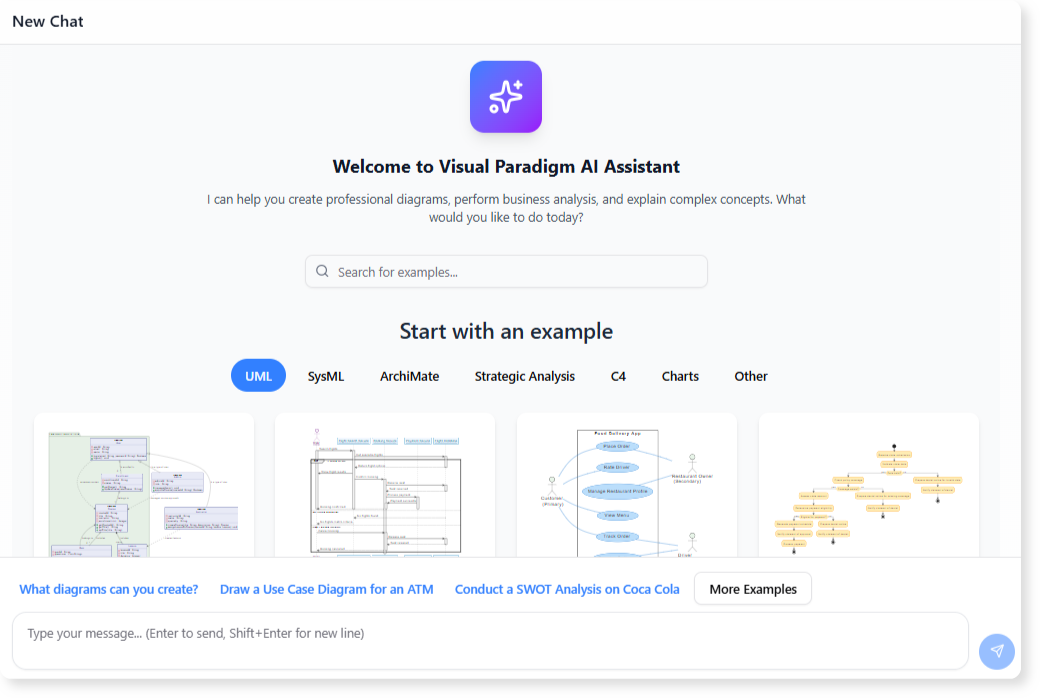
Tools such as VP Online combine structured modeling with AI assistance, making them suitable for teams transitioning from manual to intelligent modeling workflows.
Conclusion
The cost of manual modeling is not always visible, but it is real. Time loss, inconsistency, cognitive overload, and outdated models all reduce the effectiveness of Enterprise Architecture.
AI diagram tools address these challenges by eliminating repetitive work and enabling architects to focus on insight and alignment. For teams looking to keep pace with change and increase the strategic value of architecture, adopting an AI-assisted modeling approach is no longer optional. It is a practical necessity.