
Profitability is the heartbeat of any sustainable business. While revenue often grabs the headlines, the true engine of longevity lies in how a startup manages its expenses. In the context of the Business Model Canvas, the Cost Structure block is not merely an accounting exercise; it is a strategic blueprint. Understanding cost drivers allows founders to align financial resources with value creation effectively.
This guide explores how to structure cost drivers to maximize profitability. We will dissect fixed versus variable expenses, analyze unit economics, and provide a framework for optimizing operational spending without compromising growth. 📉
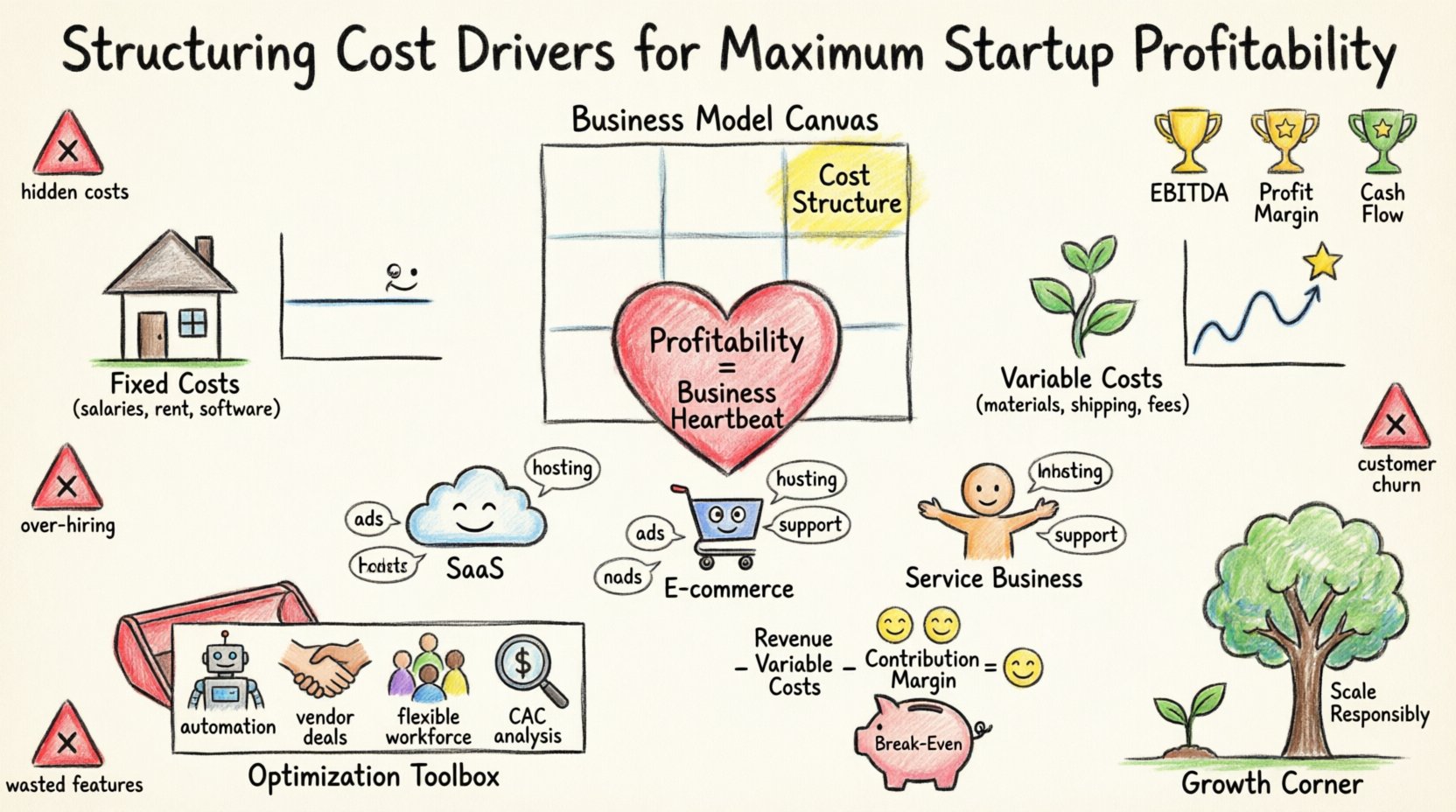
Understanding Cost Structure in the Business Model Canvas 🧩
The Business Model Canvas breaks down a venture into nine building blocks. The Cost Structure defines the most important costs incurred to operate a business model. It is the flip side of the Revenue Streams. To achieve profitability, the relationship between these two must be optimized.
- Cost-Driven: Some businesses compete primarily on having the lowest costs. Examples include low-cost airlines or budget retailers.
- Value-Driven: Other businesses focus on value creation and are willing to incur higher costs to deliver superior quality or customer experience.
When structuring costs, it is essential to identify the key drivers. These are the specific activities or resources that consume the largest portion of the budget. Focusing optimization efforts on these areas yields the highest return on investment.
Categorizing Expenses: Fixed vs. Variable 🏗️
The foundation of cost management is distinguishing between costs that remain constant and those that fluctuate with production volume. A clear understanding of this distinction allows for better cash flow forecasting.
1. Fixed Costs
Fixed costs do not change with the level of output or sales volume in the short term. These are the baseline expenses required to keep the lights on.
- Salaries: Core team compensation, especially for permanent staff.
- Rent: Office space, warehouse leases, or co-working memberships.
- Software Licenses: Annual subscriptions for necessary infrastructure.
- Insurance: Liability, health, and property coverage.
2. Variable Costs
Variable costs change in direct proportion to the volume of goods or services produced. As sales grow, these costs grow.
- Cost of Goods Sold (COGS): Raw materials, manufacturing components.
- Transaction Fees: Payment processing fees per sale.
- Shipping: Logistics and delivery expenses.
- Customer Support: Outsourced support scaled by ticket volume.
| Feature | Fixed Costs | Variable Costs |
|---|---|---|
| Behavior | Constant regardless of output | Fluctuates with output |
| Examples | Office rent, Salaries | Raw materials, Shipping |
| Control | Harder to adjust quickly | Easier to scale up or down |
| Impact on Margin | High leverage at scale | Directly affects gross margin |
Key Cost Drivers by Business Model Type 📊
Different business models have unique cost landscapes. Identifying the specific drivers for your model type is crucial for accurate financial planning.
1. SaaS and Technology
In software-as-a-service models, the product is developed once and sold many times. The cost driver shifts from production to customer acquisition and retention.
- Development: High initial investment in engineering talent.
- Infrastructure: Cloud hosting and server costs scale with user count.
- Acquisition: Marketing spend per lead is a critical metric.
2. E-Commerce and Retail
Physical goods require logistics, inventory management, and warehousing. The cost driver here is efficiency in the supply chain.
- Inventory Holding: Capital tied up in unsold stock.
- Logistics: Last-mile delivery costs.
- Returns: Reverse logistics can erode margins significantly.
3. Service-Based Businesses
Service businesses trade time for money. The primary cost driver is labor.
- Staffing: The quality and cost of human capital.
- Training: Onboarding new team members.
- Overhead: Office and administrative support.
Strategies to Optimize Cost Drivers 💡
Optimization does not always mean cutting costs. It means allocating resources more efficiently to drive growth while maintaining healthy margins.
1. Automate Repetitive Tasks
Manual processes consume time and increase error rates. Implementing automation for billing, onboarding, or data entry reduces long-term operational expenses.
- Identify bottlenecks in current workflows.
- Replace manual data entry with scripts or tools.
- Free up human talent for high-value strategic work.
2. Negotiate Vendor Contracts
Many startups sign contracts without reviewing them annually. Regularly renegotiating terms with suppliers, landlords, and service providers can yield significant savings.
- Consolidate vendors to increase bargaining power.
- Seek longer-term discounts in exchange for commitment.
- Review usage metrics to ensure you are not overpaying for unused capacity.
3. Adopt a Flexible Workforce
Transitioning some roles to contractors or freelancers can convert fixed costs into variable costs. This provides agility during lean periods.
- Use freelancers for project-based work.
- Utilize gig economy platforms for on-demand support.
- Maintain a core team of full-time employees for stability.
4. Analyze Customer Acquisition Costs (CAC)
High customer acquisition costs can quickly negate profitability. Monitoring CAC against the Lifetime Value (LTV) of a customer is essential.
- LTV:CAC Ratio: Aim for a ratio of 3:1 or higher.
- Channel Efficiency: Identify which marketing channels yield the best ROI.
- Referral Programs: Incentivize existing customers to bring in new ones at a lower cost.
Unit Economics and Profitability 📈
Unit economics measures the profitability of a single unit of business. It is the micro-level view of the financial model.
1. Contribution Margin
The contribution margin is the revenue remaining after subtracting variable costs. This amount contributes to covering fixed costs and generating profit.
- Formula: Revenue per Unit – Variable Costs per Unit.
- Goal: Maximize the margin on each sale.
2. Break-Even Analysis
This calculates the volume of sales needed to cover total costs. Understanding this point helps set realistic sales targets.
- Fixed Costs: Divide total fixed costs by contribution margin.
- Time to Break-Even: Estimate how long it takes to reach this volume.
3. Burn Rate and Runway
Startups often operate at a loss initially. Managing the burn rate ensures the company does not run out of cash before becoming profitable.
- Net Burn: Cash spent minus cash earned in a month.
- Runway: Total cash on hand divided by net burn.
- Strategy: Extend runway by reducing burn or increasing revenue velocity.
Common Pitfalls in Cost Management 🚫
Even with a solid plan, mistakes happen. Recognizing common errors can help avoid financial distress.
- Ignoring Hidden Costs: Taxes, compliance fees, and maintenance are often overlooked in initial projections.
- Over-Hiring: Bringing on talent before revenue supports it increases fixed costs prematurely.
- Premium Features: Building features customers do not pay for wastes development resources.
- Ignoring Churn: Losing customers means paying acquisition costs again without recouping the lifetime value.
The Role of Financial Discipline 🛡️
Profitability is not a destination; it is a discipline. Establishing a culture of financial responsibility across the organization ensures that cost drivers remain under control.
- Regular Reviews: Conduct monthly financial reviews to track variances.
- Budgeting: Set clear budgets for each department and monitor adherence.
- Transparency: Share financial goals with the team to align incentives.
Scaling Costs Responsibly 🌱
Growth often introduces new cost structures. Scaling requires a shift in how costs are managed.
- Economies of Scale: Costs per unit should decrease as volume increases.
- Diseconomies of Scale: Complexity can increase costs if processes become too bureaucratic.
- Infrastructure: Ensure technical infrastructure can handle increased load without excessive cost spikes.
Measuring Success Beyond Revenue 🏆
Revenue growth alone is a vanity metric if costs are out of control. Focus on profitability metrics to gauge true health.
- EBITDA: Earnings Before Interest, Taxes, Depreciation, and Amortization.
- Net Profit Margin: Net income divided by total revenue.
- Cash Flow: The actual movement of cash in and out of the business.
Final Thoughts on Sustainable Growth 🌟
Structuring cost drivers for maximum startup profitability requires a balance between aggressive growth and financial prudence. By understanding the Business Model Canvas deeply, categorizing expenses accurately, and continuously analyzing unit economics, founders can build a resilient foundation.
Profitability allows for reinvestment, innovation, and long-term survival. It is the result of deliberate choices regarding where money is spent and how value is delivered. Start with the data, validate the assumptions, and iterate on the cost structure as the business evolves.
Remember, the goal is not just to survive, but to thrive. A well-structured cost model provides the stability needed to weather market fluctuations and seize opportunities when they arise. Focus on efficiency, monitor your key metrics, and maintain a clear view of the financial impact of every strategic decision.