
Establishing a robust pricing mechanism is not merely a financial calculation; it is a core component of your business architecture. When integrated effectively into the Business Model Canvas, pricing directly influences your value proposition, customer relationships, and overall profitability. Many organizations treat pricing as an afterthought, adjusting numbers based on competitor moves rather than strategic intent. This reactive approach often erodes margins and confuses the market positioning.
Effective pricing strategies require a deep understanding of cost structures, customer willingness to pay, and the perceived value of the offering. By aligning pricing with the fundamental blocks of your business model, you create a sustainable framework that supports growth. This guide explores the mechanics of pricing within the context of business model design, offering actionable insights for structuring revenue streams that endure.
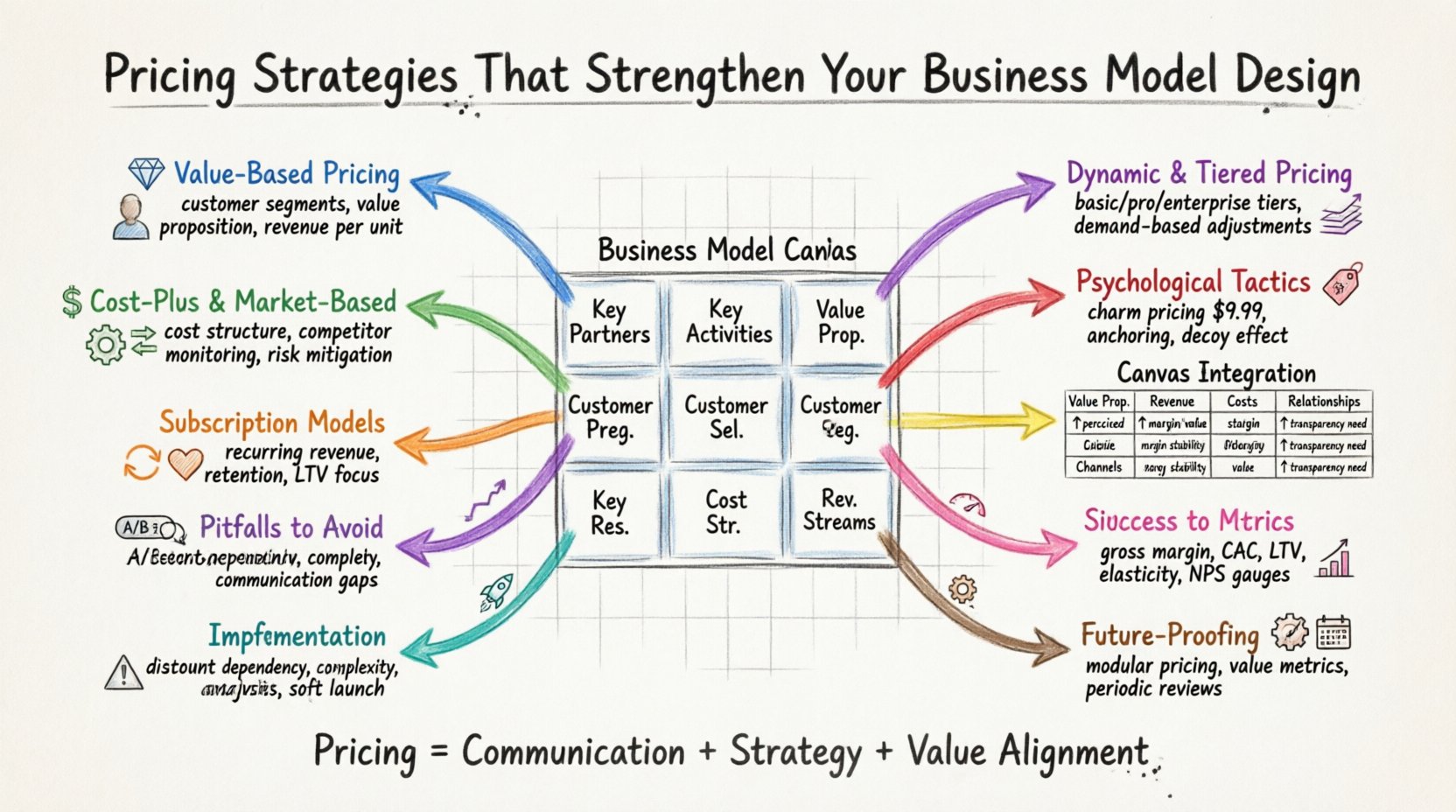
1. Understanding Value-Based Pricing 💎
Value-based pricing anchors the price point to the perceived value the product or service delivers to the customer, rather than the cost of production or competitor rates. This approach demands a thorough analysis of customer needs and the specific problems your solution solves.
- Customer Segments: Identify which segments derive the most value from your offering. High-value segments often justify premium pricing.
- Value Proposition: Clearly articulate the economic benefit. If your service saves a client 10 hours of labor, the price should reflect a fraction of that saved value.
- Revenue Streams: This model maximizes revenue per unit sold, assuming the value is communicated effectively.
To implement value-based pricing, you must engage in continuous dialogue with your users. Surveys, interviews, and usage data provide the signals needed to adjust prices dynamically. Unlike cost-plus methods, value-based pricing allows for higher margins if the perceived benefit is significant.
2. Cost-Plus and Market-Based Approaches 💰
While value-based pricing is ideal for growth, cost-plus and market-based models offer stability and risk mitigation, particularly for businesses with thin margins or commodity products.
Cost-Plus Pricing
This method calculates the total cost of producing a product or delivering a service, then adds a fixed percentage markup to ensure profitability.
- Key Activities: Requires accurate accounting of fixed and variable costs.
- Cost Structure: Ensures all operational expenses are covered before profit is realized.
- Drawbacks: Ignores customer willingness to pay. If costs are high but value is low, the price may be too high for the market.
Market-Based Pricing
Here, prices are set relative to competitors. This is common in saturated markets where differentiation is difficult.
- Key Partnerships: Often requires monitoring competitor activities closely.
- Customer Relationships: Can lead to price wars if not managed carefully.
- Strategic Use: Useful for market entry to gain share, though not ideal for long-term profitability.
3. Subscription and Recurring Revenue Models 🔄
Shifting from one-time transactions to recurring revenue creates predictable cash flow. This model fundamentally alters the Revenue Streams block of your canvas.
- Customer Relationships: Encourages long-term retention and ongoing engagement.
- Value Proposition: Often focuses on continuous access, updates, or service maintenance rather than a static product.
- Key Resources: Requires infrastructure to manage billing, access, and ongoing support.
Subscription models work best when the product improves over time or when the customer derives ongoing utility. Examples include software access, membership services, and maintenance contracts. The key is ensuring the churn rate remains low. If customers leave frequently, the lifetime value (LTV) drops, and the model fails to support the cost structure.
4. Dynamic and Tiered Pricing Structures 📈
Dynamic pricing adjusts based on demand, time, or user behavior. Tiered pricing offers different levels of service at different price points to capture varying willingness to pay.
Tiered Pricing
This structure segments customers based on features or volume. It allows you to upsell existing customers while keeping entry barriers low for new ones.
- Basic Tier: Attracts price-sensitive customers and fills the top of the funnel.
- Pro Tier: Targets power users who need more features.
- Enterprise Tier: Captures high-value accounts with custom requirements.
Dynamic Pricing
Common in travel and hospitality, dynamic pricing fluctuates based on real-time market conditions.
- Key Activities: Requires automated systems to adjust prices based on inventory and demand signals.
- Customer Perception: Must be managed carefully to avoid feelings of unfairness.
- Revenue Optimization: Can maximize yield during peak periods.
5. Psychological Pricing Tactics 🧠
Human decision-making is not always rational. Psychological pricing leverages cognitive biases to influence purchasing behavior.
- Charm Pricing: Setting prices just below a round number (e.g., $9.99 instead of $10.00) creates a perception of a bargain.
- Anchoring: Presenting a high-priced option first makes subsequent options appear more reasonable.
- Decoy Effect: Offering a third, less attractive option to make the middle option look like the best value.
These tactics should be used ethically. Deceptive practices can damage trust and harm the Customer Relationships block of your model. Transparency remains a core component of sustainable design.
6. Integrating Pricing into the Business Model Canvas 🗺️
Pricing does not exist in isolation. It interacts with every other block of the canvas. Misalignment can lead to operational inefficiencies or market rejection.
| Canvas Block | Impact of Pricing Strategy | Strategic Consideration |
|---|---|---|
| Value Proposition | Price signals quality and positioning. | Does the price match the promised value? Premium pricing requires premium delivery. |
| Revenue Streams | Defines the primary cash inflow. | Is the revenue model sustainable relative to the cost structure? |
| Cost Structure | Constraints on pricing margins. | Can you maintain margins at the target price point given fixed and variable costs? |
| Customer Relationships | Affects retention and loyalty. | Does the pricing model encourage long-term engagement or one-off purchases? |
| Channels | Influences distribution costs. | Do intermediaries take a large cut? Is direct pricing more viable? |
| Key Resources | Determines investment needs. | High pricing might require high-touch resources (support, customization). |
For instance, a low-price strategy often requires high volume, which impacts Key Activities such as logistics and customer support. Conversely, a high-price strategy might require fewer transactions but higher quality resources to maintain the brand image.
7. Implementation and Testing 🧪
Once a strategy is selected, testing is essential before a full rollout. Hypotheses about willingness to pay should be validated through controlled experiments.
- A/B Testing: Show different price points to different segments to measure conversion rates.
- Conjoint Analysis: Ask customers to choose between products with varying features and prices to determine value trade-offs.
- Soft Launch: Introduce pricing to a small group before scaling to the broader market.
Collect data on conversion, churn, and average revenue per user (ARPU). If the price is too high, volume drops. If too low, profitability suffers. The goal is to find the equilibrium point where volume and margin align with your financial targets.
8. Common Pitfalls to Avoid ⚠️
Even with a solid plan, execution errors can derail pricing effectiveness. Awareness of common mistakes helps maintain stability.
- Ignoring Cost Changes: If raw material costs rise, failing to adjust pricing erodes margins over time.
- Discount Dependency: Frequent discounts train customers to wait for sales, devaluing the core offering.
- Complexity: Too many pricing tiers confuse customers and increase support costs.
- Lack of Communication: Changing prices without explaining the value shift can lead to churn.
9. Measuring Pricing Success 📏
Success metrics extend beyond total revenue. A holistic view of pricing performance involves several key indicators.
- Gross Margin: Indicates how much profit remains after direct costs.
- Customer Acquisition Cost (CAC): Pricing affects how much you can spend to acquire a customer.
- Lifetime Value (LTV): High prices should ideally correlate with higher retention and LTV.
- Price Elasticity: Measures how demand changes when price changes.
- Net Promoter Score (NPS): Assesses if customers feel the price is fair relative to the value received.
10. Future-Proofing Your Pricing Model 🔮
Market conditions evolve. What works today may not work in five years. Building flexibility into your model ensures longevity.
- Modular Pricing: Allow customers to pick and choose components. This adapts to changing needs without redesigning the whole offer.
- Value Metrics: Tie pricing to usage metrics that scale with customer success (e.g., per transaction, per user, per volume).
- Periodic Reviews: Schedule regular audits of pricing against market data and cost structures.
By treating pricing as a dynamic element of your business model rather than a static number, you create resilience. This approach aligns financial goals with operational capabilities and customer expectations.
Final Thoughts on Strategic Pricing 🏁
Designing a pricing strategy is a continuous process of alignment. It connects the value you create with the value you capture. When executed with precision, pricing becomes a lever for growth, efficiency, and market positioning.
Focus on the value delivered to the customer segment. Ensure your cost structure supports the margin required for sustainability. Align your revenue streams with the business model canvas to create a cohesive system. Regular testing and measurement will refine the approach over time.
Remember that pricing is communication. It tells the market who you are, what you offer, and how much you are worth. Treat it with the same strategic rigor as product development or brand building.