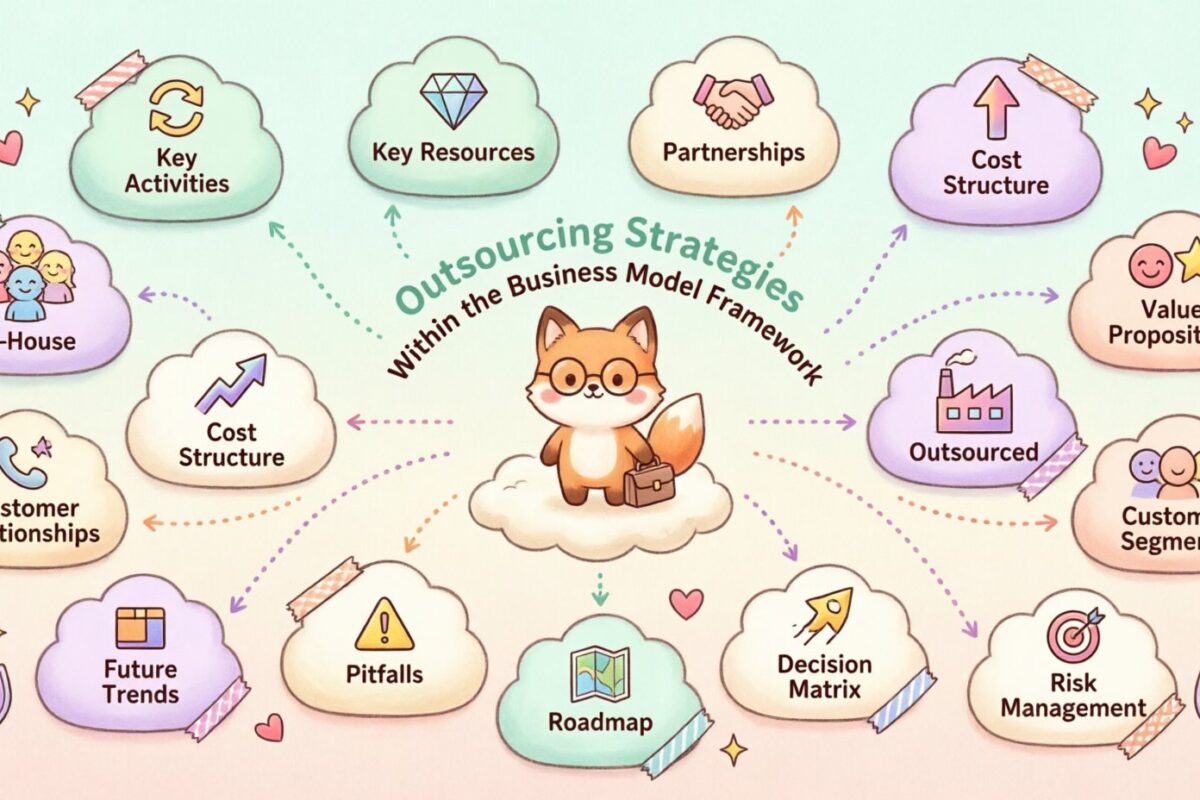
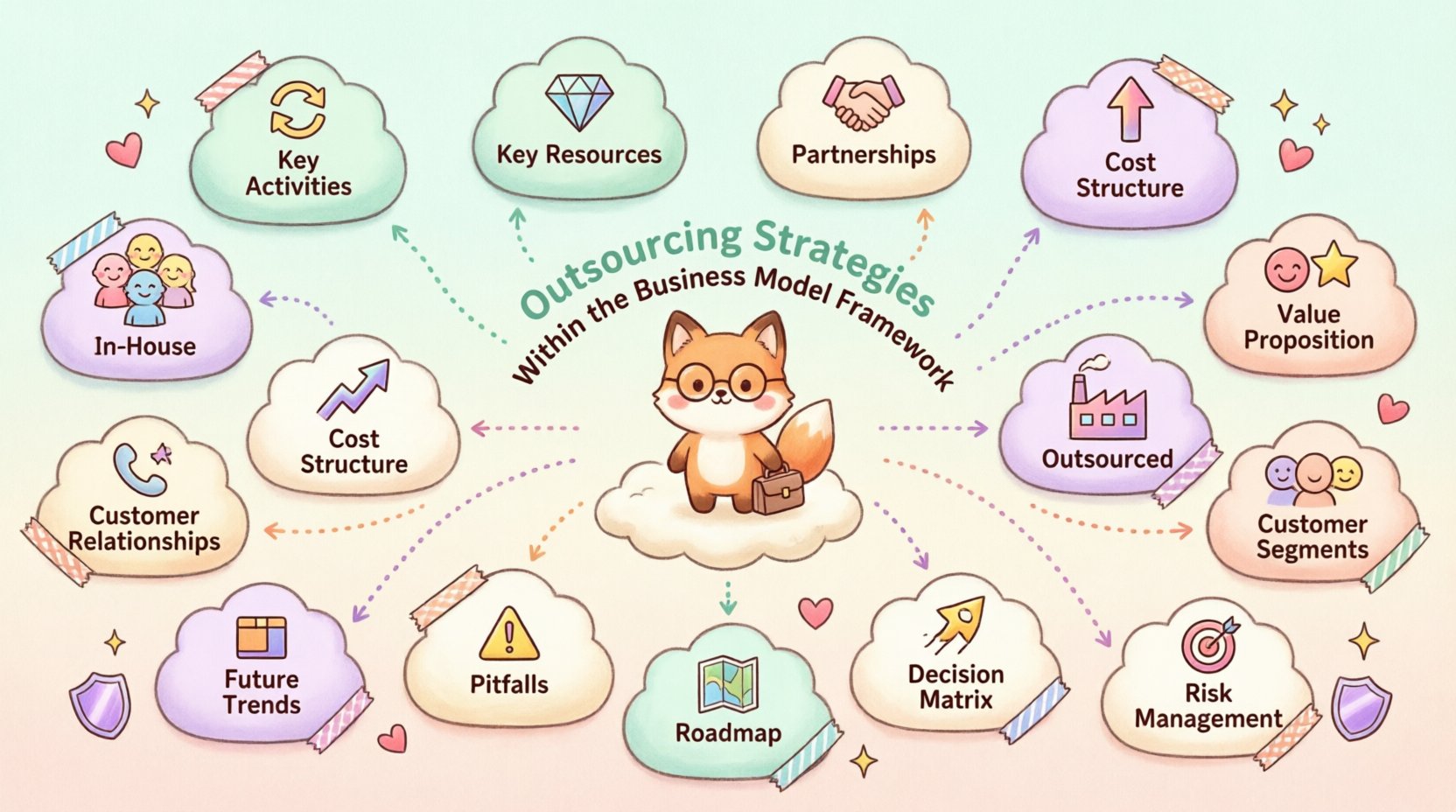
In the modern landscape of business operations, the decision to outsource is no longer just a cost-cutting measure; it is a fundamental strategic lever. Integrating outsourcing strategies within the business model framework requires a deep understanding of how external capabilities intersect with internal value creation. This guide explores the mechanics of outsourcing through the lens of the Business Model Canvas, providing a structured approach to aligning external partnerships with core organizational goals. 🧩
When organizations evaluate their operational structure, they often face the question of which functions to retain in-house and which to delegate. The answer lies not in a simple binary but in a nuanced analysis of resources, activities, and value propositions. By applying a strategic lens to outsourcing, businesses can optimize their cost structures while maintaining agility and innovation. This approach ensures that outsourcing supports rather than undermines the overall business model. 📈
1. Key Activities: Shifting Operational Focus 🔄
Key Activities represent the most important actions a company must take to operate successfully. Outsourcing within this block involves identifying tasks that are necessary but not central to the competitive advantage. The goal is to free up internal resources to focus on high-value activities that differentiate the brand.
- Identify Non-Core Functions: Determine which activities do not directly contribute to the unique value proposition. Examples include IT maintenance, payroll processing, and basic customer support.
- Assess Strategic Importance: Evaluate if the activity requires proprietary knowledge or if it can be standardized. Standardized processes are ideal candidates for outsourcing.
- Transfer Capability: Ensure the external partner possesses the necessary expertise to execute the task without loss of quality.
- Monitor Performance: Establish clear metrics to track the efficiency and effectiveness of the outsourced function.
By reassigning routine activities, leadership teams can redirect attention toward innovation and product development. This shift often leads to a leaner operational model that responds faster to market changes. The critical factor is ensuring that the transition does not create bottlenecks in the delivery of value to the customer.
2. Key Resources: Assets vs. Access 💎
Key Resources are the assets required to offer and deliver a value proposition. Traditionally, businesses sought to own these assets. However, the resource-based view of outsourcing suggests that access can be more valuable than ownership in certain contexts. This shift allows companies to scale without heavy capital investment.
Physical Resources
Manufacturing facilities, distribution centers, and hardware can be outsourced. This reduces fixed costs and converts them into variable costs. If demand fluctuates, the ability to scale resources up or down without selling off assets provides significant flexibility.
Intellectual Resources
Patents, software, and proprietary data often remain in-house to protect competitive secrets. However, research and development can sometimes be outsourced to specialized firms. This allows access to niche expertise without the long-term commitment of hiring a full-time team. Intellectual property agreements must be rigorous to prevent leakage of sensitive information.
Human Resources
Specialized talent, such as legal counsel or cybersecurity experts, can be accessed on a contract basis. This ensures high-quality input without the overhead of a permanent salary. It also allows the organization to tap into global talent pools.
3. Key Partnerships: Formalizing the Network 🤝
Key Partnerships outline the network of suppliers and partners that make the business model work. Outsourcing is essentially the formalization of these partnerships. It transforms a transactional relationship into a strategic alliance.
There are four main types of partnerships relevant to outsourcing:
- Make-or-Buy: Deciding whether to produce internally or purchase from a vendor.
- Strategic Alliances: Cooperation between non-competitors to pursue new opportunities.
- Coopetition: Strategic partnerships between competitors to share resources.
- Joint Ventures: Creating a new entity to share risk and reward.
Effective partnership management requires clear communication channels and aligned incentives. When outsourcing, the partner becomes an extension of the organization. Their performance directly impacts the brand reputation. Therefore, selecting partners based on cultural fit and reliability is as important as selecting them based on price.
4. Cost Structure: Fixed to Variable Shift 📉
One of the primary drivers for outsourcing is the optimization of the cost structure. Moving from a fixed-cost model to a variable-cost model can significantly improve financial resilience. This is particularly relevant in volatile economic environments.
| Cost Type | In-House Model | Outsourced Model |
|---|---|---|
| Salaries | Fixed | Variable (Pay per use) |
| Equipment | High CAPEX | Low CAPEX |
| Training | Internal Responsibility | Included in Service Fee |
| Maintenance | Internal Overhead | Managed by Partner |
This shift reduces the break-even point for the organization. It allows the company to survive downturns with less financial strain. However, it requires careful forecasting to ensure that variable costs do not exceed fixed costs in high-growth scenarios. The total cost of ownership must be calculated, including management overhead and transition costs.
5. Value Proposition: Quality Perception 🌟
The value proposition defines the bundle of products and services that create value for a specific customer segment. A common fear regarding outsourcing is that it may dilute the quality of the value delivered. This concern must be addressed through rigorous quality control mechanisms.
Outsourcing can enhance the value proposition in the following ways:
- Access to Specialization: Partners often possess superior technology or expertise that the primary company lacks.
- Speed to Market: External teams can accelerate development cycles, allowing for faster innovation.
- Global Reach: Partners can provide localized support, improving the customer experience in different regions.
Conversely, poor execution can lead to brand damage. If a customer interacts with an outsourced support agent who lacks product knowledge, the value proposition is compromised. Therefore, the brand must maintain strict governance over how the outsourced function is presented to the end user. Training programs and brand guidelines must be transferred to the partner.
6. Customer Relationships: Service Standards 📞
Customer Relationships describe the types of relationships a company establishes with specific customer segments. Outsourcing often impacts the relationship through customer support and account management functions.
When outsourcing customer relationships, the organization must define the service level agreement (SLA) clearly. Key considerations include:
- Response Time: How quickly must inquiries be addressed?
- Resolution Rate: What percentage of issues must be solved on the first contact?
- Tone and Voice: How should the brand sound during interactions?
- Escalation Paths: When should an issue be transferred to internal staff?
Automated systems can handle routine inquiries, while human agents handle complex issues. This hybrid approach ensures efficiency without sacrificing the personal touch. Data security is also paramount when handling customer information. Partners must comply with relevant privacy regulations, such as GDPR or CCPA, to maintain trust.
7. Channels: Distribution Networks 📦
Channels describe how a company communicates with and reaches its customer segments to deliver a value proposition. Outsourcing logistics and distribution is a common strategy to expand market reach without building a physical infrastructure.
Consider the following aspects of channel outsourcing:
- Warehousing: Third-party logistics providers can manage inventory and storage.
- Delivery: Shipping partners handle the last mile of delivery.
- Digital Distribution: App stores and marketplaces act as channels for software products.
Using established channels reduces the time required to enter new markets. It leverages the partner’s existing network and reputation. However, relying on too many intermediaries can reduce margins. The balance between reach and profitability must be calculated carefully. Direct channels may be retained for high-margin customers, while indirect channels serve broader markets.
8. Customer Segments: Market Reach 🎯
Customer Segments define the different groups of people or organizations an enterprise aims to reach and serve. Outsourcing can help access segments that were previously unreachable due to resource constraints.
Partnerships can open doors to new demographics:
- Geographic Expansion: Local partners understand cultural nuances and regulatory environments.
- Niche Markets: Specialized distributors often serve specific industries better than generalists.
- B2B to B2C: Partnerships can help a business transition from serving other businesses to serving end consumers.
This expansion requires a deep understanding of the target segment. The partner must align with the brand values to ensure consistent messaging. Misalignment can lead to confusion in the market and erosion of brand equity.
9. Risk Management & Governance 🛡️
Outsourcing introduces specific risks that must be managed proactively. These include operational risk, compliance risk, and strategic risk. A robust governance framework is essential to mitigate these threats.
Operational Risk
Dependency on a single provider can create a single point of failure. Diversifying the vendor base reduces this risk. Business continuity plans should be in place to ensure service delivery if a partner encounters issues.
Compliance Risk
Partners must adhere to industry regulations. Failure to comply can result in legal penalties for the primary company. Regular audits and compliance checks are necessary to ensure ongoing adherence.
Strategic Risk
Over-reliance on outsourcing can lead to a loss of internal capability. If a company outsources too much, it may lose the ability to innovate or pivot quickly. It is crucial to retain core competencies in-house to maintain strategic control.
10. Implementation Roadmap 🗺️
Successfully integrating outsourcing into the business model requires a phased approach. Rushing the process can lead to operational disruptions. The following steps provide a structured path forward.
- Step 1: Audit Current Operations: Map all activities and resources against the business model canvas.
- Step 2: Define Objectives: Clarify what the organization hopes to achieve (cost reduction, speed, quality).
- Step 3: Identify Candidates: Select specific functions or segments for outsourcing.
- Step 4: Vendor Selection: Evaluate potential partners based on capability, cost, and culture.
- Step 5: Contract Negotiation: Draft clear agreements covering SLAs, pricing, and termination clauses.
- Step 6: Transition Management: Execute the handover with close monitoring and feedback loops.
- Step 7: Performance Review: Continuously assess outcomes against the initial objectives.
11. Common Pitfalls ⚠️
Even with a solid plan, organizations often stumble during the outsourcing process. Awareness of common mistakes can help avoid them.
- Choosing Price Over Value: The cheapest option is rarely the best. Focus on total value and long-term partnership.
- Lack of Internal Oversight: Abandoning the function entirely without monitoring leads to failure.
- Ignoring Cultural Fit: A partner that does not share the company’s values will struggle to represent the brand.
- Communication Gaps: Ineffective communication between internal teams and external vendors causes delays.
- Underestimating Transition Costs: Hidden costs often arise during the handover phase.
Avoiding these pitfalls requires discipline and clear governance. The relationship with the vendor should be treated as a partnership, not just a transaction. Regular review meetings and open dialogue help maintain alignment.
12. Decision Matrix: Make vs. Buy 📊
To assist in strategic planning, the following matrix helps evaluate whether to keep a function in-house or outsource it. This tool considers factors like strategic importance, core competency, and cost.
| Factor | Keep In-House | Outsource |
|---|---|---|
| Strategic Importance | High (Core Differentiator) | Low (Commodity) |
| Core Competency | Unique Expertise | Standard Practice |
| Control Requirements | High (Direct Oversight) | Medium/Low (SLA Based) |
| Cost Sensitivity | Investment Warranted | Variable Cost Preferred |
Using this matrix, leaders can make informed decisions that align with the broader business strategy. It prevents emotional decisions based on fear or short-term gains. The goal is sustainable growth through optimized resource allocation.
13. Future Trends in Outsourcing 🚀
The landscape of outsourcing is evolving. Technology is enabling new forms of collaboration and efficiency. Understanding these trends helps organizations stay ahead of the curve.
- Artificial Intelligence: AI tools are automating routine tasks, allowing human agents to focus on complex issues.
- Remote Work: The shift to remote work has expanded the pool of available talent globally.
- Agile Methodologies: Partners are increasingly expected to work in agile sprints rather than long-term contracts.
- Data Analytics: Real-time data sharing allows for better performance tracking and decision-making.
Organizations that adapt to these trends will find greater success in their outsourcing strategies. Flexibility and innovation are key attributes for future partnerships.
14. Final Thoughts on Strategic Alignment 🎯
Integrating outsourcing strategies within the business model framework is a complex but rewarding endeavor. It requires a balance between external dependency and internal control. When executed correctly, it enhances agility, reduces costs, and allows the organization to focus on its core mission.
The decision to outsource should always be driven by strategic value, not just immediate savings. A well-structured outsourcing plan strengthens the business model canvas by optimizing every block from Key Activities to Customer Relationships. By following a disciplined approach and maintaining high standards of governance, organizations can leverage external capabilities to drive sustainable growth.
Success in this area depends on continuous evaluation and adaptation. Markets change, technologies evolve, and business needs shift. The outsourcing strategy must be dynamic to remain effective. Regular reviews ensure that the partnership continues to deliver value over time. This ongoing commitment is the foundation of a resilient and competitive business model.