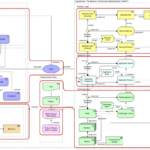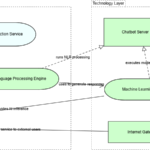


ArchiMate models are powerful, but they are not always easy to understand. For non-technical stakeholders, even well-designed diagrams can feel abstract, dense, or overly formal. As a result, Enterprise Architecture often struggles to communicate its value beyond technical teams.
AI changes this dynamic. Instead of relying solely on diagrams or basic text descriptions, AI can explain ArchiMate models in clear, contextual language. It turns structure into stories and relationships into meaning, making architecture more accessible to everyone involved.
This article explores how AI helps explain ArchiMate models to non-technical teams and why this capability is becoming increasingly important.
Why ArchiMate Models Are Hard to Read for Non-Technical Teams
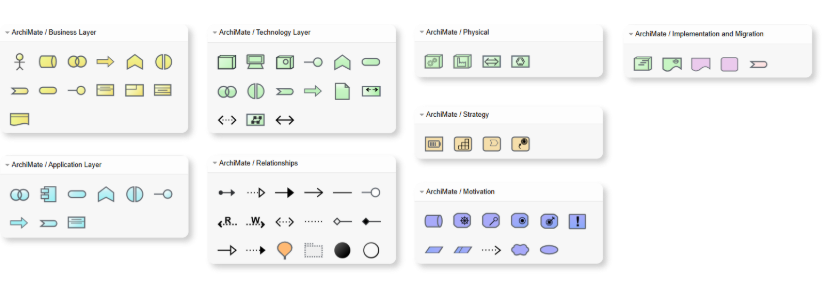
ArchiMate is designed to be precise and unambiguous. It uses standardized elements, relationships, and viewpoints to represent complex systems clearly. While this precision benefits architects, it can be overwhelming for non-technical audiences.
Business stakeholders may not be familiar with modeling notation. They may struggle to interpret layers, symbols, or abstract concepts. Even when diagrams are accurate, the meaning behind them can remain unclear.
This gap limits collaboration and reduces the practical impact of Enterprise Architecture.
Moving Beyond Labels and Static Descriptions
Traditional approaches often rely on adding text labels or manual explanations to diagrams. While helpful, these explanations are static and require ongoing maintenance.
AI offers a more dynamic alternative. By analyzing the underlying model, AI can generate explanations that adapt to context and audience. It can explain the same model differently depending on whether the reader is a business leader, analyst, or project manager.
This flexibility goes beyond basic text. It allows architecture to be explained in a way that matches how people think and communicate.
How AI Interprets ArchiMate Models for Explanation
AI-enabled ArchiMate tools do not simply read diagram labels. They understand the structure of the model, including:
- Which business processes support which goals
- How applications enable operations
- How data and technology dependencies interact
- How changes in one area affect others
Using this understanding, AI can generate narrative explanations that reflect intent rather than just structure.
For example, instead of listing components, the AI can explain how a customer-facing process relies on multiple systems and why those systems are important.
Explaining Architecture Through Natural Language Interaction
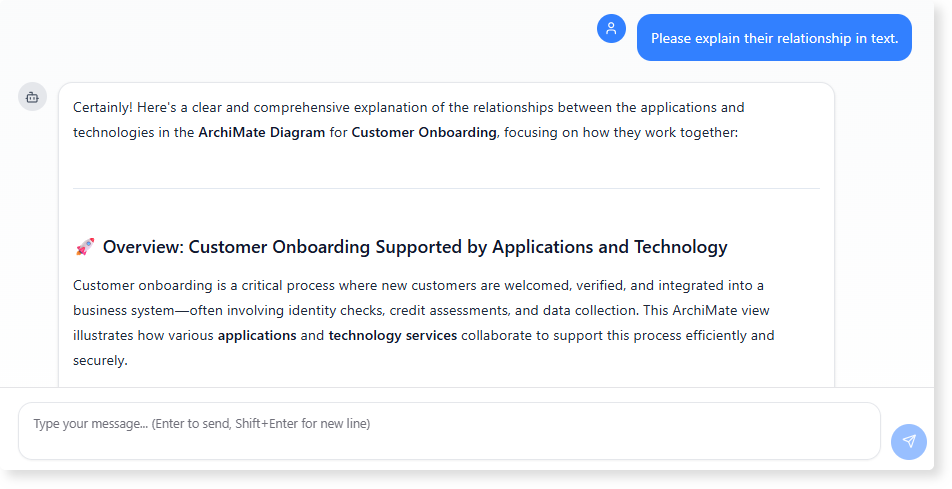
One of the most powerful ways AI helps non-technical teams is through conversational interaction. Stakeholders can ask questions in plain language and receive meaningful answers.
Questions such as “Which systems are critical for this process?” or “What happens if this application fails?” can be answered directly from the model. This interaction turns architecture from a static reference into an interactive knowledge source. Non-technical teams no longer need to interpret diagrams on their own. The AI acts as a guide.
Supporting Better Communication and Alignment
When architecture is easier to understand, conversations become more productive. Business and technical teams can align on goals, constraints, and impacts without getting lost in notation.
AI-generated explanations help ensure everyone shares the same understanding of how the organization operates and how changes affect it. This reduces misunderstandings and supports better decision-making. Over time, architecture becomes a common language rather than a specialized discipline.
Reducing the Burden on Architects
Explaining architecture repeatedly to different audiences can be time-consuming. Architects often spend significant effort translating models into presentations or verbal explanations.
AI reduces this burden by providing consistent, on-demand explanations. Architects can focus on refining models and guiding decisions, knowing that stakeholders have access to clear explanations whenever they need them. This improves efficiency without sacrificing quality or control.
Practical Use Cases for AI-Driven Explanations
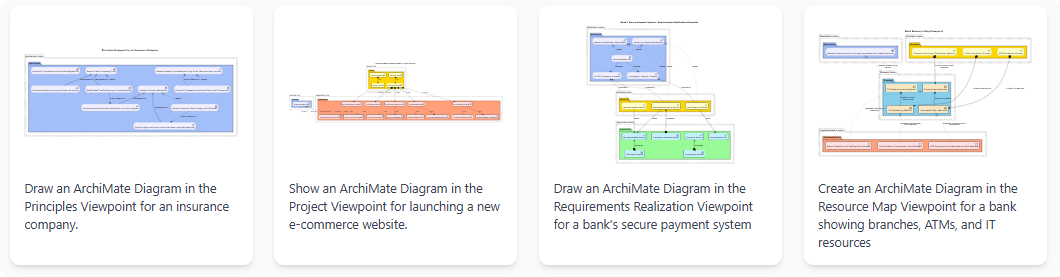
AI explanations of ArchiMate models are particularly valuable in situations such as:
- Strategy reviews and executive briefings
- Cross-functional workshops
- Project onboarding and handover
- Change impact assessments
- Risk and dependency discussions
In each case, the goal is not to teach ArchiMate, but to communicate meaning.
Conclusion
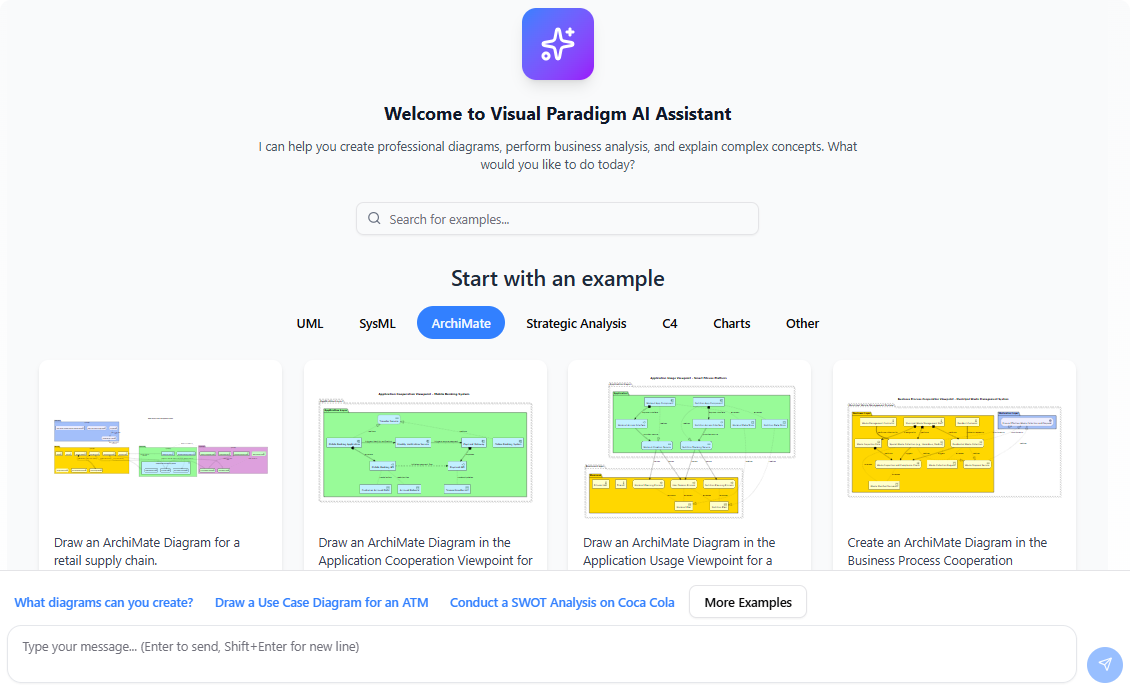
Beyond basic text, AI enables a new way of explaining ArchiMate models. By translating structure into clear language and supporting conversational interaction, AI helps non-technical teams understand and use Enterprise Architecture more effectively.
As AI-enabled ArchiMate tools continue to evolve, the ability to explain architecture clearly will become just as important as the ability to model it. When architecture is understood, it becomes truly valuable.